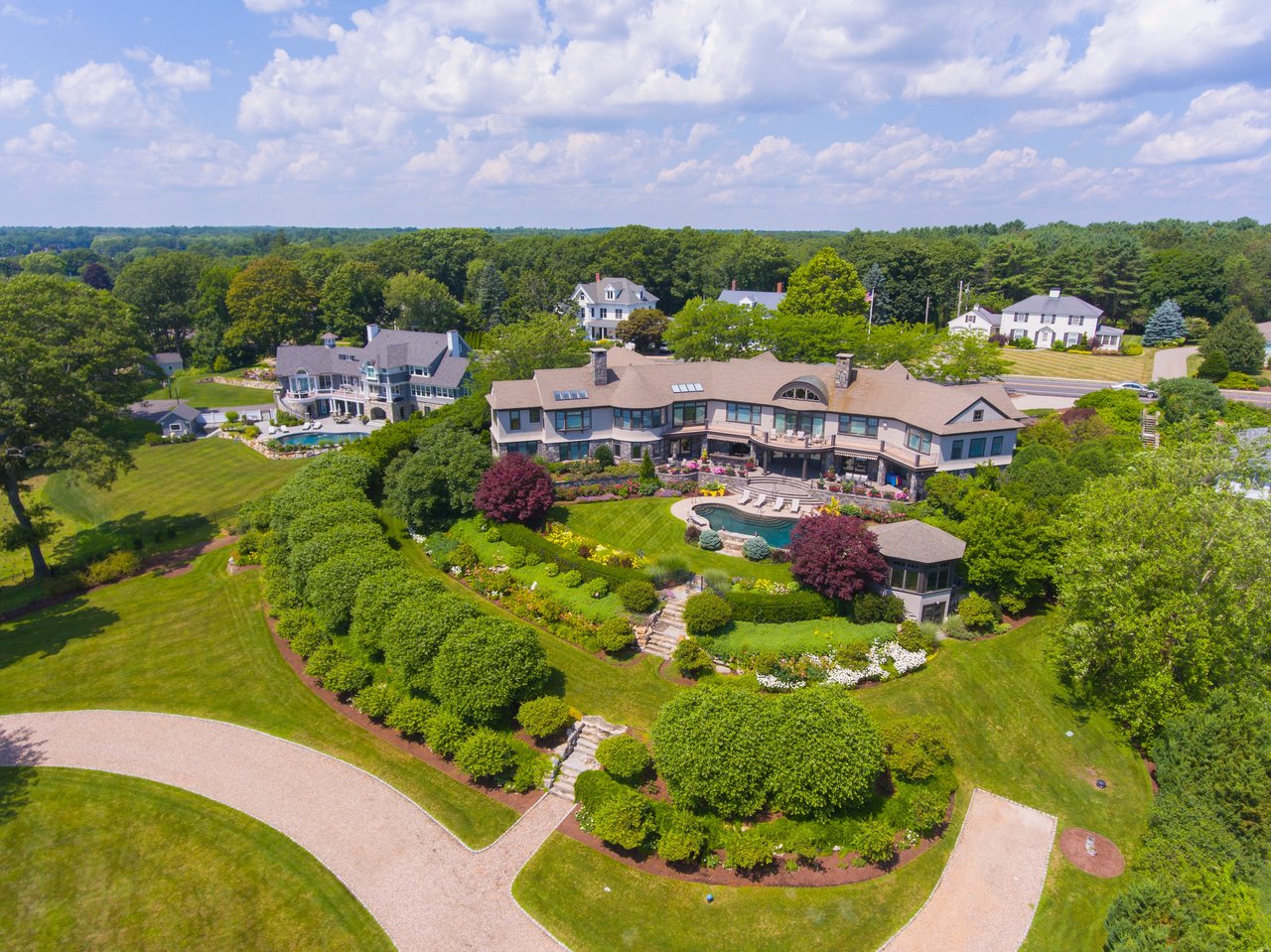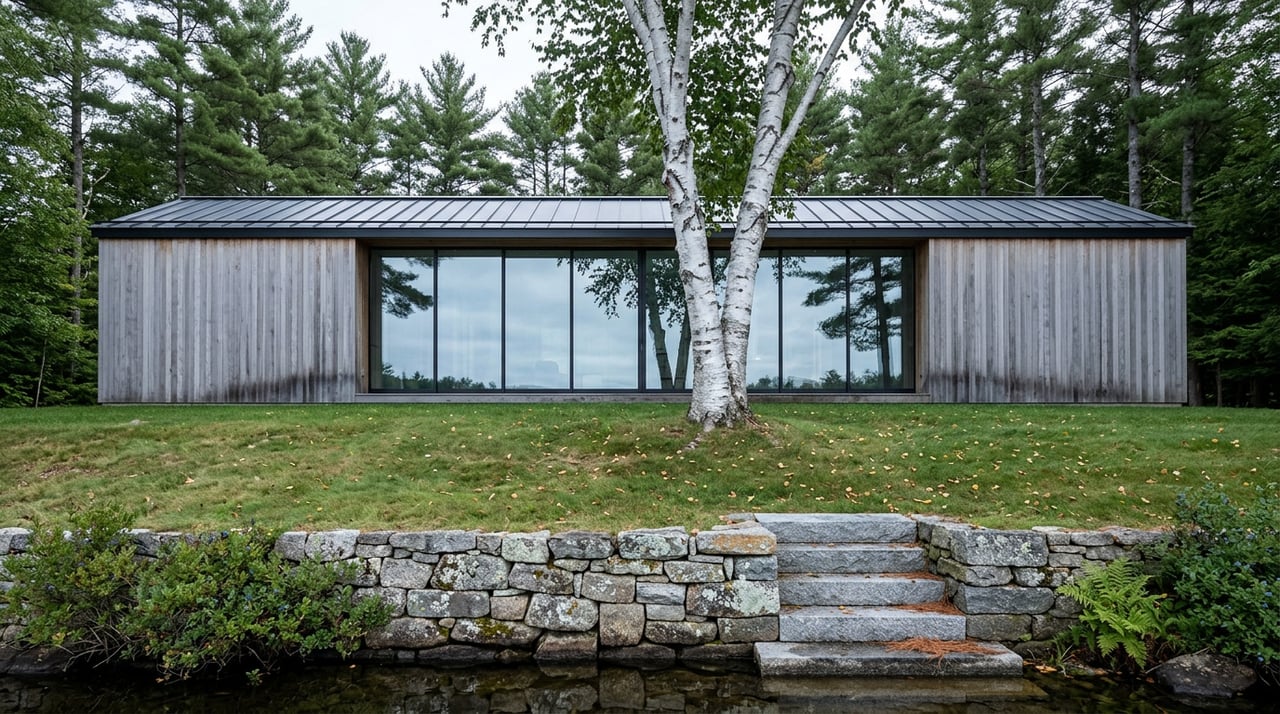
The dock in the listing photos looks like part of the house. It isn't. According to the New Hampshire Department of Environmental Services, on Lake Winnipesaukee, the crib dock, the boat lift, and the stairs down to the water are sitting on land the State of New Hampshire owns, and what you're actually buying when you close is a permit that lets your dock interfere with the public's right to that water. Two recent legal changes have made that distinction more expensive to get wrong, right as the median price for a waterfront home on the lake has climbed past $2 million.
None of this is a reason to walk away from a shorefront purchase. It's a reason to ask different questions than the ones most buyers bring to a showing.
The Lake Bed Isn't Yours, Even If Your Deed Says Waterfront
The state owns the bed. The water itself and the ground beneath it are held in trust for the public. A wetlands permit doesn't transfer ownership of that land to you. It gives your dock permission to sit there.
The New Hampshire Supreme Court made this distinction concrete in May 2025. In Appeal of Robert Newcomb, the court reviewed a case involving a lakeside deck and stairway built on a Winnipesaukee property in 2018 and 2019. The owners argued the structure sat over land they privately owned beneath the waterline, so no permit should have been required. The court disagreed, holding that any structure extending over the surface of the lake falls under the state's prohibition on dwellings over water, regardless of what the owner believes about title to the submerged land. The ruling has no precedential authority because the court issued it as an order rather than a full opinion, but it shows how the state's courts are currently reading the statute, and it's a useful data point for anyone assuming their property line settles the question of what they're allowed to build.
Winnipesaukee Plays by Bigger Rules Than Every Other NH Lake
According to the New Hampshire Department of Environmental Services, Winnipesaukee is the only lake in New Hampshire larger than 10,000 acres, and that size threshold changes the physical dimensions of what state rules allow a private boat slip to be.
| Waterbody size | Boat slip dimensions |
|---|---|
| 10,000 acres or less | 20 ft long × 6 ft wide × 3 ft deep |
| Greater than 10,000 acres (Winnipesaukee only) | 25 ft long × 8 ft wide × 3 ft deep |
If you're comparing a Winnipesaukee listing against something on Squam or Newfound, the frontage numbers on paper don't tell the whole story. A slip on the big lake can legally be larger than an equivalent slip almost anywhere else in the state, and that difference shows up in how many boats a given stretch of shoreline can actually accommodate.
Grandfathered Doesn't Mean Flexible
A lot of the older docks on Winnipesaukee predate the rules now in effect. According to the Watermark Marine Construction, structures built before September 4, 1978 for seasonal work, or before November 26, 1996 for shoreland construction closer to the reference line, can carry configurations that couldn't be permitted new today. That grandfathered status is genuinely valuable. A modest cottage with an oversized or oddly angled crib dock can be worth more than a larger home with no dock at all, because building that same footprint from scratch under current rules isn't possible.
The catch is that grandfathering locks in the past, it doesn't hand you room to grow. Existing nonconforming docks can generally be modified only if the change doesn't increase surface area or add slips. You inherit the structure as documented, not as a starting point for something bigger.
You can see this play out in recent state filings. In August 2025, the state's Governor and Executive Council approved a project on Bear Island in Meredith covering roughly 400 feet of shorefront, permitting two 4-by-25-foot seasonal piers connected to an existing crib-supported dock, sized to stay within the five-slip maximum that frontage allows. A separate filing from December 2025 on Dale Island in Meredith, with about 312 feet of frontage, replaced two seasonal wharves with piling-supported versions and reconfigured an existing pier, again capped at five slips for that stretch of shoreline. Both went through public notice and conservation commission review before approval. Neither project added capacity beyond what the existing frontage already supported. That's the pattern buyers should expect: rebuild and repair are workable, expansion runs into a wall.
The Buyer, Not the Seller, Now Owns the Septic Question
Since September 1, 2024, New Hampshire law has placed the responsibility for evaluating a shoreland septic system on the buyer, not the seller. Under RSA 485-A:39, if any part of a developed waterfront property's septic system sits within 250 feet of the reference line, here's what the law now requires:
- The buyer must hire a New Hampshire-licensed septic system evaluator, at the buyer's own expense, before the property transfers.
- If the existing system was never approved by the state, or was approved before September 1, 1989, the buyer must also hire a state-permitted septic system designer to check the elevation of the effluent disposal area against the seasonal high water table.
- If the evaluation turns up signs of failure, the buyer has 180 days after closing to replace the system and file proof of the replacement with the state and the local health officer.
- A buyer can accept a seller's existing evaluation instead of ordering a new one, but only if it was completed within the prior 180 days and the buyer acknowledges accepting it in writing.
This is a real reversal from how things worked before. Waterfront site assessments used to be the seller's obligation. Now the cost, the timeline, and the follow-up all sit with whoever is buying. If you're touring shorefront listings on Winnipesaukee this fall, this belongs in your due diligence checklist before you write an offer, not after you're already under contract.
Why This Matters More at Today's Prices
Lake Winnipesaukee's waterfront market has been moving fast in 2026. Twenty-nine waterfront single-family homes closed on the lake in the first half of the year for a combined $92.6 million, a 43 percent jump in dollar volume compared to the same period a year earlier, with the median sale landing at $2.3 million. The high end held its own too. The top sale so far this year was $12.3 million on Black Cat Island in Meredith. Active waterfront inventory sat at roughly 46 listings at a median asking price near $2.5 million.
At those numbers, a septic system that fails its state-mandated evaluation, or a dock whose grandfathered footprint turns out to be undocumented, isn't a rounding error in the deal. It's the kind of finding that can shift negotiations by tens of thousands of dollars, or push a closing date back while the paperwork gets sorted out. The lake's appeal hasn't changed. What's changed is how much the fine print behind the view is worth checking before you're the one holding the permit.
A Few Questions Worth Asking Before You Offer
Who pays for the septic evaluation on a Winnipesaukee shoreland property? As of September 1, 2024, the buyer does, and at the buyer's expense, unless the buyer chooses to accept a seller's evaluation completed within the prior 180 days and formally acknowledges accepting it in writing.
Do I need my own attorney for a shorefront closing here? Waterfront transactions on Winnipesaukee sit at the intersection of the state's wetlands rules under RSA 482-A, the shoreland protection rules under RSA 483-B, and now the septic evaluation rules under RSA 485-A. Many buyers bring in an attorney who has specifically worked through one of these permit files before, rather than relying on a standard purchase and sale form.
If you're looking at shorefront on Winnipesaukee this season and want to know what a specific dock's history actually says, or what a septic evaluation timeline looks like for a property you're considering, that's exactly the kind of groundwork Bailey Clermont Realty walks through with buyers before an offer goes in, not after. Let's Connect.
This article is general information, not legal, tax or financial advice. Consult a qualified professional about your situation.